
FDB Møbler J67 ダイニングチェアの魅力 - SHARK ATTACK ONLINE SHOP

Hello everyone.
This is Ito from cerote antiques Sendagaya store.

It's finally starting to feel like summer is in full swing.

Now that the moving season has calmed down, it seems that more and more customers are looking for items that can serve as interior accents, such as objects and lighting, rather than large furniture.

Once a piece of furniture is completed, it is difficult to find the opportunity to replace it.

However, if you add some special furniture, the view from your usual room will look a little different, and you will feel like you can spend each day feeling special.

Today, we will introduce some Scandinavian furniture that we have been handling more and more recently.
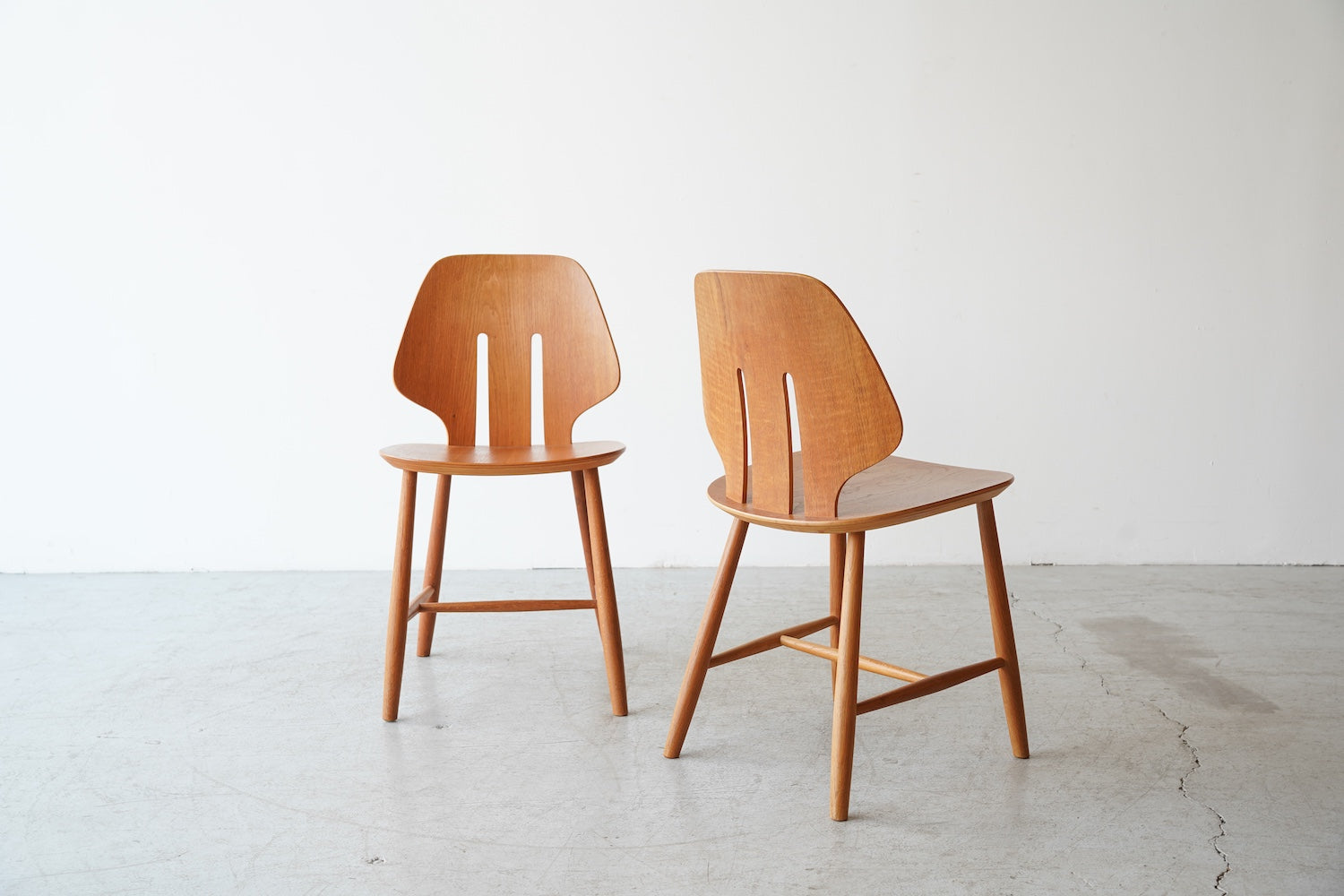
We would like to introduce the J67 chair from Danish manufacturer FDB Møbler .

We will also introduce the unique value of vintage items and how to identify them, with a slightly more niche perspective.


What is FDB Møbler? Its history and philosophy

FDB Møbler was founded in 1942 as the furniture division of the Danish Co-operative Union (FDB).
The company aimed to create furniture for the public, meeting the very challenging criteria of the time: durable, beautiful, functional, and affordable.
Behind this was a strong desire to transform furniture from something special into something everyday, and to improve the quality of life.

Renowned designers, including the first design chief Børge Mogensen, the second Paul M. Volta, and the third Ivan A. Johansson, have inherited the company's philosophy and have produced many masterpieces.


The unique character and appeal of the J67 dining chair

The J67 is a unique monopod from FDB Møbler, designed by Ivan A. Johansson in 1957.

It features a large, molded plywood back and exquisitely curved design, making it exceptionally beautiful when viewed from behind. Its design, which combines softness and strength, exudes a unique character not found in other Scandinavian chairs.

Johansson became president at just 33 years old, and despite his short tenure, he continued to produce works with a unique worldview. The J67 is one of his signature works, and FDB Møbler himself praised it as a "perfect idiom."

The charm of the vintage J67 lies in the depth of the wood grain and the well-worn texture that develops over time, something not found in current products. Another perk of vintage instruments is the ability to sense a "story" that cannot be found in new products.


Identifying the authenticity and age of vintage items through stamps and labels

The key to determining the value of a vintage FDB Møbler is to look at the differences in the engravings and labels, roughly as follows:

  • 1940s-50s : Characterized by a simple FDB logo (triangle or hexagon) burned directly into the wood. If this remains, it is extremely rare and highly valuable as a collector's item.

  • 1950s-1970s : Red or blue paper labels with "FDB Møbler" or "Denmark" printed on them. If the labels remain, it is easier to determine the era and the value increases.

  • 1970s-1980s : Simple branding irons and "Made in Denmark" stamps.

  • 2013 and later (reprint) : Labels feature modern logos, fonts, and designer names. They have a texture that is as good as new.

    Values ​​that can be read from the engraving

    Stamps and labels are proof of the furniture's "era" and "originality." Pieces that still retain the original branding and paper labels are particularly rare and historically valuable, making them highly sought-after collector's items.

    Additionally, differences in the position of the engraving, finish, and numerical engravings (e.g., "59 10 3") may indicate the year, month, and factory code of manufacture, which can be useful for pinpointing the exact year of manufacture.


Differences in value depending on the era

Vintage J67s are highly valued, especially original examples from the 1950s and 1960s.
If the branding or paper label remains, it will become even rarer and more sought after by collectors.
On the other hand, the simple engravings from the 1970s onwards and modern reproduction models, while affordable, may leave those seeking authenticity feeling a little unsatisfied.


The greatest appeal of the vintage J67 is the unique texture and presence that comes from decades of use.

The depth of the wood grain that is not found in new chairs, the craftsmanship of the time that remains in the fine details, and the different expressions that change over time for each chair add new value to these chairs.

With its simple yet unique silhouette, it can be used as a chair for a dining table or desk, but we also recommend using it as a stand-alone display chair.

This is a piece that can be used for a long time, whether as an introduction to Scandinavian furniture or as part of a special collection.

Please experience the charm of the "real thing" while feeling the engravings and aging that are unique to vintage items, as well as the history and craftsmanship behind them.


Leave a comment

All comments are moderated before being published

BLOG MENU